REHIT Workout: The 10-Minute Protocol That Raises VO2 Max
 Run these workouts on your iPhone, or hands-free on Apple Watch. Get PEAKVO2
 REHIT (reduced-exertion high-intensity interval training) is the shortest evidence-backed cardio workout there is: a 10-minute session containing just two all-out 20-second sprints on a bike, done three times a week. In the original controlled trial, six weeks of REHIT raised VO2 max by 15 percent in men and 12 percent in women, from 30 minutes of total weekly exercise (Metcalfe et al., 2012).
If the Norwegian 4x4 is the heavyweight of VO2 max training, REHIT is the minimalist: it asks the least total time and the least suffering per session of any protocol with published results. Here is what the research actually shows, the exact workout, and where its limits are.
What a REHIT Session Looks Like
The whole session fits in about 10 minutes on a stationary bike:
- 2 to 3 minutes easy pedaling to warm up (light resistance, conversational).
- Sprint 1: 20 seconds all-out. Not hard, not "9 out of 10": genuinely maximal, against high resistance, like your life depends on it.
- 3 to 4 minutes easy pedaling to recover.
- Sprint 2: 20 seconds all-out.
- 2 to 3 minutes easy pedaling to cool down.
That is the entire workout: two sprints, roughly 40 seconds of real work, done three times a week. The original study built up to it, starting with 10-second sprints in week one and 15-second sprints in weeks two and three before settling at 20 seconds, which is a sensible on-ramp if you are new to all-out efforts.
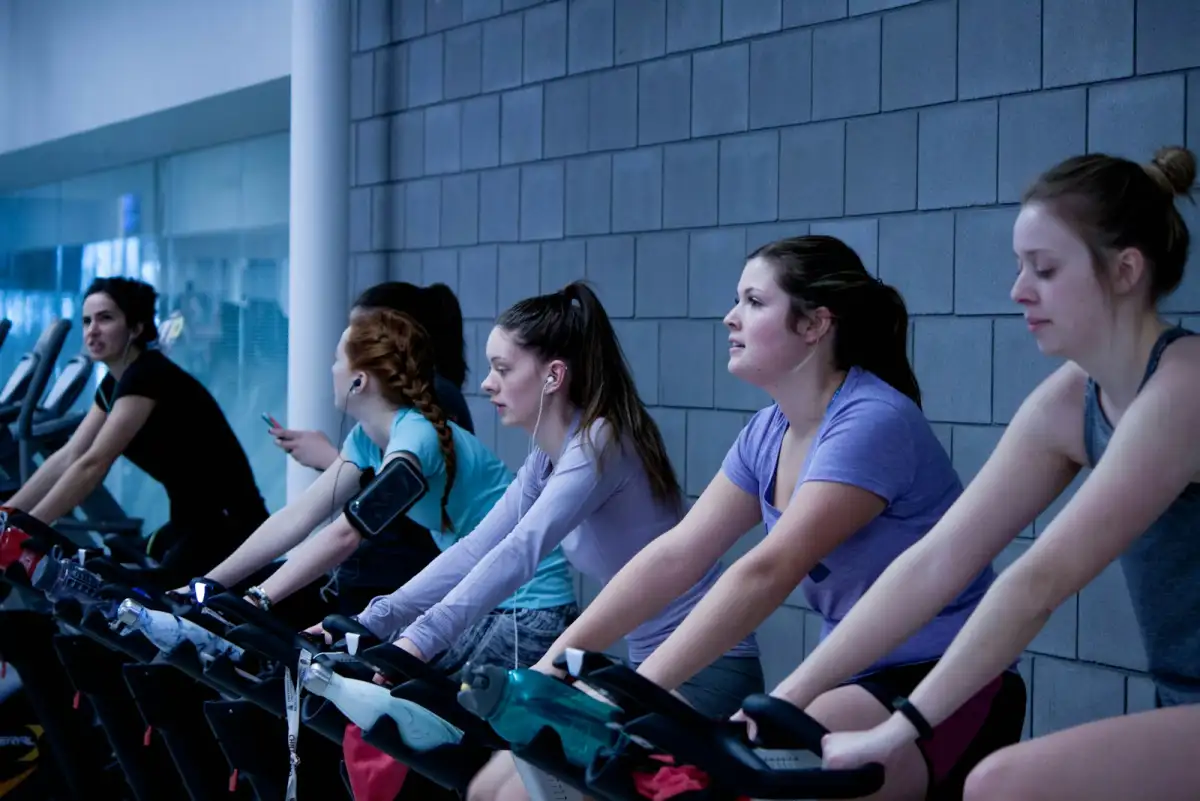
A bike is the right tool for this. All-out running sprints from a standing start carry real hamstring risk and take seconds to reach full power; on a bike against resistance you are at maximal effort almost instantly, safely.
PEAKVO2. The interval app for your cardio fitness.
REHIT 2x20 guided on iPhone and Apple Watch: automatic phases, haptic sprint countdowns, and your VO2 max tracked over time. Two sprints, nine minutes, done.
Download PEAKVO2What the Research Shows
REHIT comes out of Niels Vollaard's lab at the University of Bath, built on a simple question: how little high-intensity work still produces adaptation?
The original trial put 29 sedentary adults through six weeks of the protocol above. VO2 max rose 15 percent in men and 12 percent in women, and insulin sensitivity improved 28 percent in men, all from 10-minute sessions that participants rated as only moderately hard (RPE 13 of 20), which is the "reduced exertion" in the name (Metcalfe et al., 2012).
Why only two sprints? A meta-analysis across 34 sprint-training studies found that adding more sprints per session did not produce bigger VO2 max gains; if anything, the trend pointed the other way (Vollaard et al., 2017). The first all-out sprint appears to trigger most of the signal (rapid glycogen breakdown and strong sympathetic activation); repeating it twenty times adds fatigue faster than it adds adaptation.
Why 20 seconds? A follow-up study cut the sprints from 20 to 10 seconds and the VO2 max improvement shrank measurably, without the sessions feeling any easier (Nalçakan et al., 2018). Twenty seconds is the studied dose; the app protocol below uses exactly that.
Does it work outside the lab? In type 2 diabetes patients, REHIT improved VO2 max more than five 30-minute moderate walking sessions per week, on a fraction of the time (Ruffino et al., 2017).
REHIT vs Tabata vs Norwegian 4x4
All three are intervals; they occupy different points on the time-versus-dose curve.
| REHIT | Tabata | Norwegian 4x4 | |
|---|---|---|---|
| Session length | ~10 min | ~14 min with warm-up | ~38 min |
| Hard work per session | 40 seconds | 4 minutes | 16 minutes |
| Intensity | All-out sprints | All-out intervals | 90-95% of max HR |
| Documented VO2 max gain | 12-15% in 6 weeks (untrained) | Large, in athletes | 7.2% in 8 weeks (trained) |
| Best for | Minimal time, getting started | Short sessions, conditioned athletes | Maximum stimulus, structured training |
The honest framing: the spectacular REHIT percentages come from sedentary beginners, who improve fast on almost any stimulus; the 4x4's 7.2 percent was measured in already-trained subjects. If you are starting from the couch or your week is genuinely full, REHIT is the highest return per minute in the literature. As fitness grows, the ceiling of 40 weekly seconds of work arrives, and protocols with more time at high intensity, like the 4x4 or Tabata, take over. Many people run both: REHIT on crowded weeks, 4x4 in focused blocks.
How to Run REHIT (Without Buying a Special Bike)
REHIT is marketed hard by makers of AI exercise bikes that cost as much as a used car. You do not need one: the protocol is two timed sprints on any stationary bike with adjustable resistance, and the timing is the only thing that needs automating.
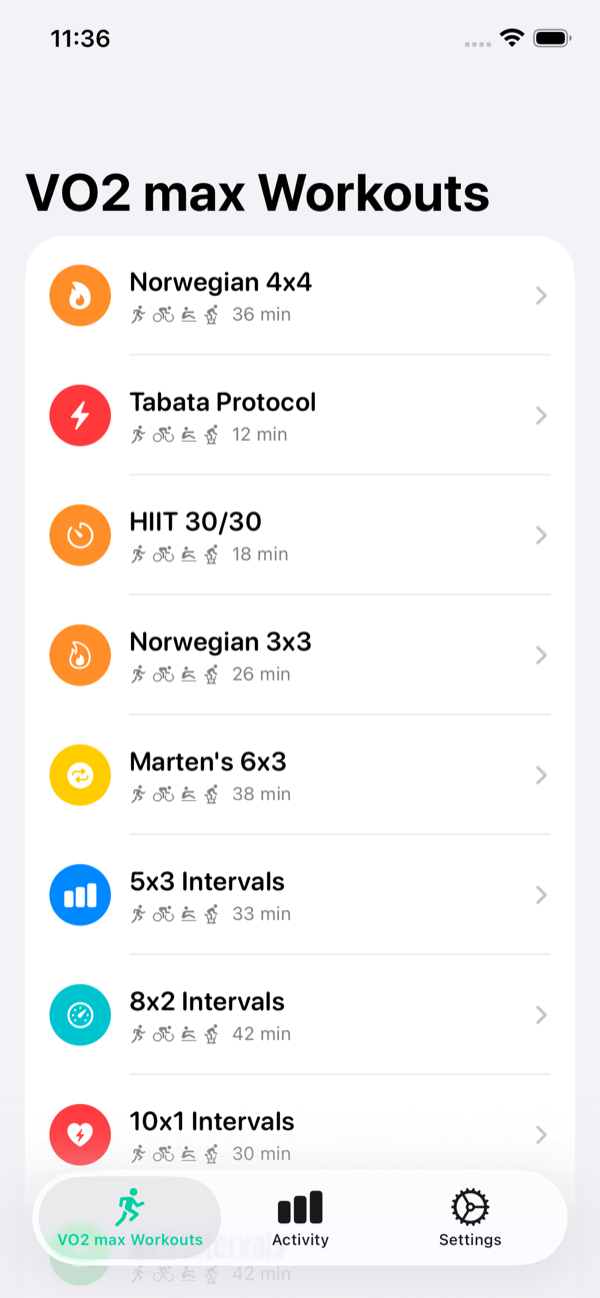
PEAKVO2 has the protocol built in as REHIT 2x20, a 9-minute guided session: the app walks you through warm-up, counts down each 20-second sprint with a full-screen color change and haptic cues, and paces the recoveries. Start it, put the phone on the handlebars or wear the watch, and give the two sprints everything.
Two practical notes. First, all-out means all-out: the protocol's entire effect hangs on those 40 seconds being genuinely maximal, so set the resistance high enough that you cannot hold the sprint past 20 seconds. Second, if you are untrained, older, or have any cardiovascular risk factors, get medical clearance before adding all-out sprints; they are the most intense thing you can do on a bike.
Track the result the same way as any VO2 max training: your Apple Watch cardio fitness score, Fitbit, or Whoop will show the trend, or test yourself with the VO2 max calculator every 4 to 8 weeks.
Frequently Asked Questions
What does REHIT stand for?
Reduced-exertion high-intensity interval training. The name comes from the research goal: keeping the proven VO2 max stimulus of sprint training while cutting the number of sprints to the minimum that still works, which turned out to be two per session.
How is REHIT different from HIIT?
Dose. A typical HIIT session accumulates many hard intervals (Tabata: eight, a 4x4: sixteen hard minutes); REHIT uses exactly two all-out 20-second sprints inside an otherwise easy 10-minute ride. Research found that adding more sprints per session did not increase the VO2 max gain, which is the insight REHIT is built on.
Does REHIT really work?
In controlled trials, yes: 12 to 15 percent VO2 max improvement in six weeks in sedentary adults, plus a 28 percent insulin sensitivity improvement in men, from three 10-minute sessions a week. The caveat: those subjects started untrained. The fitter you are, the less 40 seconds of weekly work can move, and longer protocols take over.
Do I need a special AI bike for REHIT?
No. The studied protocol is two timed all-out sprints on an ordinary stationary bike with enough resistance. What you need is the timing and the honesty to sprint maximally; an interval app with countdowns and haptic cues handles the first part.
How many times a week should I do REHIT?
Three sessions per week is the studied frequency, on non-consecutive days. Because each session contains only 40 seconds of true work, recovery demand is low, but the sprints only work if they stay genuinely all-out, so do not stack them daily.
Can I do REHIT by running instead of cycling?
Cycling is strongly preferred. All-out efforts from a standing start are hard on hamstrings when running, and it takes seconds to reach full power on foot; on a bike against high resistance you are at maximal output almost immediately and safely. If you have no bike, hill sprints are the safer running approximation.
Keep Reading
- Norwegian 4x4 Protocol: Proven HIIT to Raise VO2 Max
- Tabata vs Norwegian 4x4: Which Interval Protocol Fits You
- How to Improve Your VO2 Max
- Interval Training for Beginners
- VO2 Max by Age: Chart of Normative Scores
References
- Metcalfe RS, Babraj JA, Fawkner SG, Vollaard NB. Towards the minimal amount of exercise for improving metabolic health: beneficial effects of reduced-exertion high-intensity interval training. Eur J Appl Physiol. 2012;112(7):2767-2775. PubMed
- Vollaard NBJ, Metcalfe RS, Williams S. Effect of Number of Sprints in an SIT Session on Change in VO2max: A Meta-analysis. Med Sci Sports Exerc. 2017;49(6):1147-1156. PubMed
- Nalçakan GR, Songsorn P, Fitzpatrick BL, et al. Decreasing sprint duration from 20 to 10 s during reduced-exertion high-intensity interval training (REHIT) attenuates the increase in maximal aerobic capacity but has no effect on affective and perceptual responses. Appl Physiol Nutr Metab. 2018;43(4):338-344. PubMed
- Ruffino JS, Songsorn P, Haggett M, et al. A comparison of the health benefits of reduced-exertion high-intensity interval training (REHIT) and moderate-intensity walking in type 2 diabetes patients. Appl Physiol Nutr Metab. 2017;42(2):202-208. PubMed