
Why Is My VO2 Max So Low? A Decision Tree
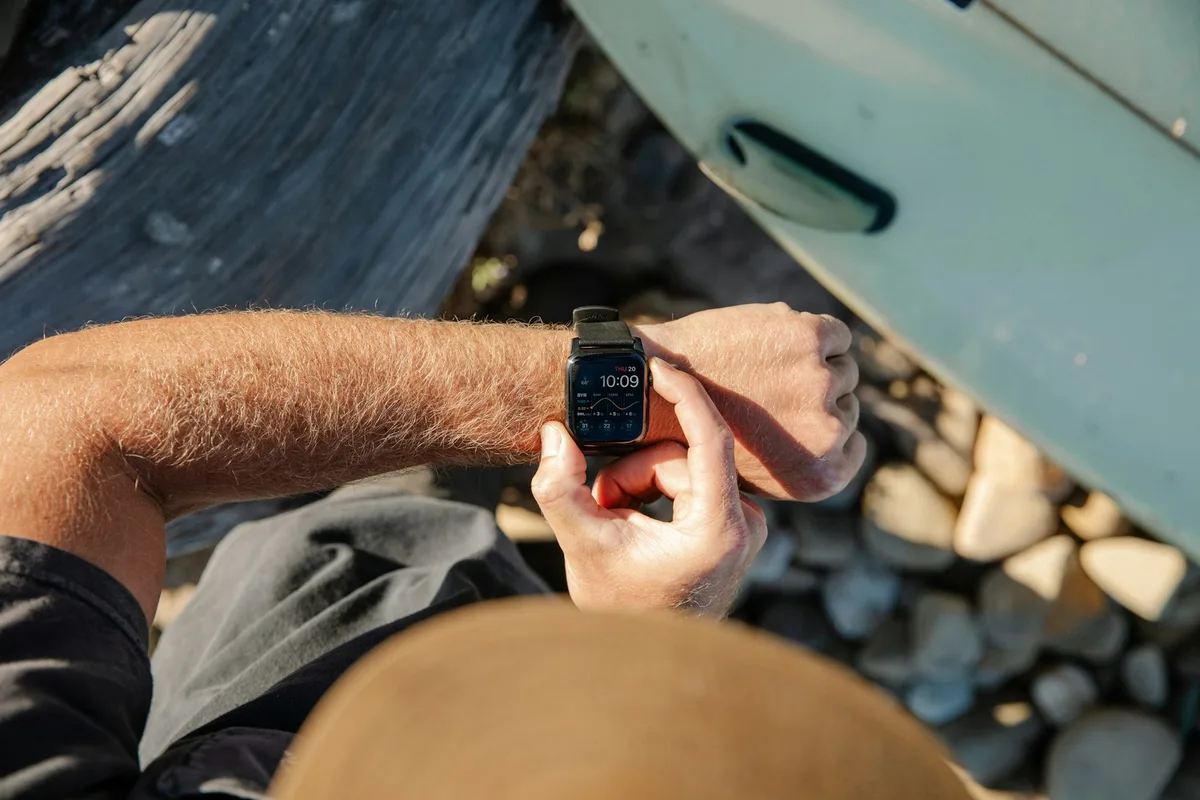
If your watch just told you your cardio fitness is low, the first question is not "how do I fix it?" It's "is this number even real?" Wearable estimates can be off by 5 to 15 percent in either direction, and what looks alarming on your wrist might be completely normal for your age and sex, or it might be an accurate signal that your heart and lungs need work. This guide walks through all three possibilities in order, so you know exactly what your number means before you do anything about it.
Before you panic, run through this decision tree:
- Is the number accurate? (Watch limitations cause most low readings.)
- If it is accurate, is it actually low? (Compare to age and sex norms.)
- If it is genuinely low, what do you do? (Structured training, explained below.)
Step 1: Is Your VO2 Max Number Even Accurate?
Smartwatches do not measure VO2 max. They estimate it from heart rate, pace, and movement data during outdoor workouts. The algorithm then compares your effort to population averages. If the input data is messy, the output is garbage.
Common reasons your watch underestimates VO2 max
You rarely do outdoor walks or runs. Apple Watch needs at least 20 minutes of outdoor walking or running per week to generate a cardio fitness estimate (Apple Support). Treadmill, indoor cycling, and strength training do not count. If you mostly train indoors, your score is based on stale or partial data.
Your heart rate data is unreliable. Wrist-based optical sensors struggle with tattoos, dark skin tones, loose watch fit, cold weather, and high-intensity interval work. If the watch thinks your heart rate is lower than it actually is during a hard effort, it concludes you must be unfit to produce that pace.
You walk when the watch thinks you are running. If you take walk breaks during a "run" workout, the algorithm averages the slower segments into your effort and the score drops.
You just started a new medication. Beta blockers, SGLT2 inhibitors, and other heart rate affecting medications throw off the estimate by suppressing your heart rate response to exercise.
Your max heart rate is set incorrectly. Most watches default to the 220 minus age formula, which has a standard deviation of about 12 beats per minute. If your actual max is 15 beats higher than the default, your watch thinks every workout is harder than it really is, and your VO2 max estimate drops.
How to check if the number is real
Three quick sanity checks:
- Compare your score to a field test. Run as far as you can in 12 minutes on flat ground, then use the Cooper test formula. If your field test estimate is 5+ points higher than your watch, the watch is underestimating.
- Check your workout history. If you have fewer than 4 outdoor walk or run sessions in the last month, the data set is too small to trust.
- Compare two devices. If you own both a Garmin and an Apple Watch, see how close the two estimates are. Large divergence (more than 5 points) usually means one is wrong.
For the most accurate answer, book a VO2 max lab test at a lab near you. Clinical gas exchange testing costs $150 to $300 and removes all ambiguity.
Step 2: Is Your VO2 Max Actually Low for Your Age?
If you have confirmed the number is real, the next question is whether it is genuinely low. Most people compare themselves to elite athletes they saw on YouTube, which is not useful. The right comparison is age matched and sex matched normative data.
VO2 max percentile benchmarks (ml/kg/min)
| Age | Poor (men) | Average (men) | Good (men) | Poor (women) | Average (women) | Good (women) |
|---|---|---|---|---|---|---|
| 20 to 29 | < 35 | 40 to 45 | 50+ | < 28 | 33 to 38 | 42+ |
| 30 to 39 | < 33 | 37 to 42 | 47+ | < 27 | 31 to 36 | 40+ |
| 40 to 49 | < 30 | 34 to 39 | 44+ | < 25 | 29 to 33 | 37+ |
| 50 to 59 | < 27 | 31 to 36 | 41+ | < 22 | 26 to 30 | 34+ |
| 60 to 69 | < 24 | 28 to 33 | 37+ | < 20 | 23 to 27 | 31+ |
| 70+ | < 21 | 24 to 29 | 33+ | < 17 | 20 to 24 | 28+ |
Data adapted from ACSM and Cooper Institute norms. See our full VO2 max chart by age and gender for percentile detail.
A 45 year old woman with a VO2 max of 29 is not low. She is average. A 35 year old man with a 30 is genuinely below average and worth addressing. Context matters.
For women specifically, VO2 max is typically 10 to 15 percent lower than men at the same age and fitness level due to differences in hemoglobin concentration, blood volume, and heart size. Comparing your score to a male benchmark will always make you feel worse than you should.
When a "low" score is actually fine
- You are over 40 and your score falls in the average range for your age. This is normal, not a problem.
- You are a woman comparing yourself to male norms.
- You are recovering from illness, sleep loss, or a stressful life period. VO2 max estimates are temporarily depressed.
- You are at high altitude. Both your actual VO2 max and the watch estimate drop in thinner air.
- You are detrained after 2 to 4 weeks off. You lose 4 to 14 percent in the first month of inactivity (Mujika & Padilla, 2000). The good news: you regain most of it within 4 to 6 weeks of restarting.
When a low score is a real signal
If your VO2 max lands in the "poor" column for your age and sex, it is a legitimate warning. VO2 max is the strongest predictor of all cause mortality, stronger than smoking, diabetes, or high blood pressure. Moving from the bottom 20 percent to just average cuts mortality risk by roughly 50 percent (Mandsager et al., 2018).
The biggest longevity ROI in all of fitness comes from people in this bucket improving by 5 to 10 points. If this is you, the next section is the plan.
Step 3: What to Do When Your VO2 Max Is Genuinely Low
The training response is the same regardless of why your number is low. What changes is how aggressive you can be and how quickly you can add intensity.
If you are deconditioned but otherwise healthy
Start with 3 sessions per week:
- 2 easy zone 2 sessions (30 to 40 minutes at 60 to 70 percent of max heart rate)
- 1 short interval session: 6 to 8 rounds of 1 minute hard, 2 minutes easy
After 3 weeks, add a fourth session and extend zone 2 duration. After 6 weeks, replace the short intervals with the Norwegian 4x4 protocol, the most researched HIIT format for VO2 max gains.
Expected improvement: 5 to 10 percent in 8 weeks, often more if you are starting from the bottom percentile (Milanovic et al., 2015).
If you are over 40 or returning from a long break
Recovery takes longer, so spread HIIT sessions at least 48 to 72 hours apart. Prioritize zone 2 volume for the first 4 weeks before adding intensity. Strength training becomes non negotiable after 40 because muscle loss accelerates the aging curve. See our complete guide to training after 40.
If you have a medical flag
A genuinely low VO2 max combined with symptoms (chest discomfort, unusual shortness of breath, lightheadedness during exercise) is a reason to see your doctor before starting intense training. Common underlying causes: iron deficiency anemia, hypothyroidism, sleep apnea, and early cardiovascular disease. A basic blood panel (ferritin, TSH, CBC) rules out the common metabolic causes in one visit.
The full training framework
For the complete evidence based approach, see our guide to improving VO2 max. It covers the five most effective training methods, realistic timelines, and sample training plans from beginner through intermediate. For a deeper dive into the limiter that often caps progress before VO2 max does, read our lactate threshold guide.
When to See a Doctor vs. Just Train Harder
Use this quick filter:
- Train harder. You feel fine, just out of shape. Your score is average or below average for your age. No symptoms during exercise.
- Get bloodwork first. Persistent fatigue despite sleep, unusually heavy periods, vegetarian or vegan diet with no testing, or family history of thyroid issues.
- See a doctor before intense training. Chest pain or pressure during exercise, fainting, irregular heartbeat, or VO2 max that is abruptly lower than your recent baseline with no lifestyle explanation.
Train the Right Way on Your Apple Watch
PEAKVO2 guides you through Norwegian 4x4 intervals with real time heart rate zones and automatic phase transitions, the fastest proven way to raise VO2 max.
Download PEAKVO2Frequently Asked Questions
Why did my VO2 max suddenly drop?
A sudden drop of 3 to 5 points is almost always data noise, not a physiological change. Your actual VO2 max cannot drop that fast in a week. Common triggers: a sick week, poor sleep, dehydration, a new medication, skipping outdoor walks or runs, or changing watch wear (loose strap, new tattoo). If the drop persists for more than 4 weeks and you have no training disruption, get a blood panel to rule out anemia or thyroid issues.
Can my VO2 max be low if I exercise regularly?
Yes, and this is the most frustrating version of the problem. The two most common causes: you exercise at moderate intensity only (the "gray zone") and never push above 90 percent of max heart rate, or your watch is not capturing your real workouts (indoor training does not feed the estimate on most devices). Adding one true HIIT session per week fixes the first problem. Doing outdoor walks or runs more often fixes the second.
Is a VO2 max of 30 low?
It depends entirely on your age and sex. A VO2 max of 30 is below average for a 30 year old man but fine for a 65 year old woman. Use our VO2 max chart to find your percentile.
How accurate is Apple Watch VO2 max?
Apple Watch cardio fitness estimates are typically within 5 to 10 percent of lab measured values for people who regularly do outdoor walks or runs. Accuracy drops significantly for indoor only exercisers, people on heart rate affecting medications, and those with irregular heart rhythms. For a full breakdown, see our Apple Watch VO2 max guide.
Can genetics cause a low VO2 max?
Yes. The HERITAGE Family Study found that the response to identical training programs varied from 0 to over 40 percent improvement between individuals, with roughly half of the variability explained by genetics (Bouchard et al., 1999). Some people have a lower ceiling than others. But even genetic "low responders" improve significantly with sufficient training volume and intensity. Nobody is stuck at their starting point.
Does a low VO2 max mean I have heart disease?
Not directly. A low VO2 max is a risk factor, not a diagnosis. It reflects how well your cardiovascular and respiratory systems deliver and use oxygen. Low fitness raises the risk of future cardiovascular events, but a low score on its own does not mean you currently have a heart problem. If you have symptoms during exercise, see a doctor. If you just have a low number, start training.
The Bottom Line
A low VO2 max score is almost never a reason to panic, but it is often a reason to pay attention. Most alarming readings come from measurement artifacts: too few outdoor workouts, a bad heart rate reading, or an incorrect max heart rate setting. Once you have confirmed the number is real, compare it to age and sex norms before deciding anything. And if it truly is low, the longevity ROI of moving from the bottom percentile to average is the highest in all of preventive medicine. Start with 3 sessions per week, add the Norwegian 4x4 after a few weeks, and retest in 8 to 12 weeks.
Keep Reading
- How to Improve VO2 Max: The Complete Evidence Based Guide
- What Is a Good VO2 Max? Charts by Age and Gender
- Apple Watch Cardio Fitness: What Your Score Means
- Garmin VO2 Max: How to Improve Your Estimate
- VO2 Max After 40: Why It Matters More Than Ever
Get a Real VO2 Max Measurement
Rule out watch errors with a clinical gas exchange test at one of 160+ labs worldwide.
Find a LabReferences
- Mandsager K, Harb S, Cremer P, et al. Association of cardiorespiratory fitness with long term mortality among adults undergoing exercise treadmill testing. JAMA Netw Open. 2018;1(6):e183605. PubMed
- Bouchard C, An P, Rice T, et al. Familial aggregation of VO2max response to exercise training: results from the HERITAGE Family Study. J Appl Physiol. 1999;87(3):1003-1008. PubMed
- Milanovic Z, Sporis G, Weston M. Effectiveness of high intensity interval training (HIT) and continuous endurance training for VO2max improvements: a systematic review and meta analysis. Sports Med. 2015;45(10):1469-1481. PubMed
- Mujika I, Padilla S. Detraining: loss of training induced physiological and performance adaptations. Part I. Sports Med. 2000;30(2):79-87. PubMed