
VO2 Max for Women: What's Different and How to Train
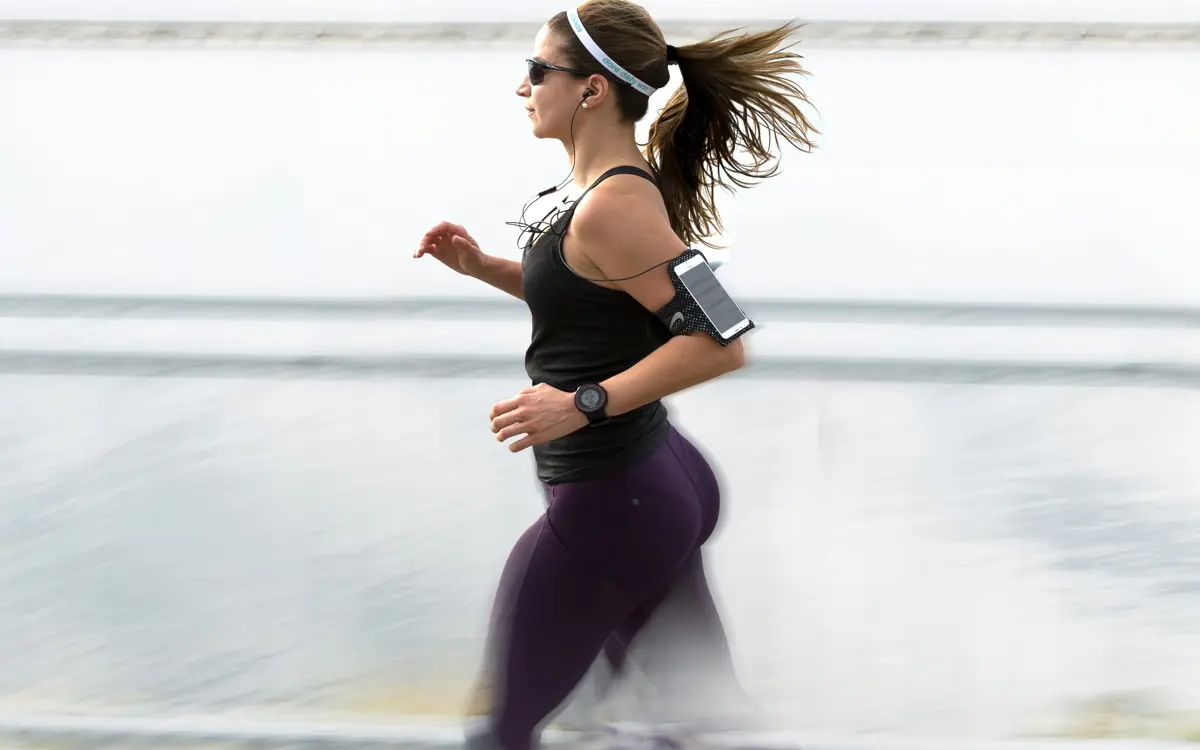
Women typically have a VO2 max that is 10-15% lower than men of the same age and fitness level, primarily due to differences in hemoglobin concentration, blood volume, and heart size. But the training methods that improve VO2 max work equally well in women, and the longevity benefits of a high VO2 max are just as powerful regardless of sex.
Most VO2 max content online is written with men as the default. Charts use male norms, training advice ignores the menstrual cycle, and menopause is rarely mentioned. This guide is specifically for women: where you should be, what's different about your physiology, and how to train effectively around the factors that are unique to you.
If you're not sure where your VO2 max stands, get tested at a lab for the most accurate measurement, or check what counts as a good score for your age.
VO2 Max Charts for Women by Age
These values represent population norms for women based on published reference data. Find your age group and see where you rank.
| Age | Poor | Below Avg | Average | Above Avg | Excellent | Elite |
|---|---|---|---|---|---|---|
| 20-29 | < 28 | 28-33 | 33-37 | 37-41 | 41-46 | > 46 |
| 30-39 | < 27 | 27-31 | 31-35 | 35-40 | 40-45 | > 45 |
| 40-49 | < 25 | 25-29 | 29-33 | 33-37 | 37-41 | > 41 |
| 50-59 | < 22 | 22-27 | 27-31 | 31-35 | 35-39 | > 39 |
| 60-69 | < 20 | 20-24 | 24-28 | 28-32 | 32-36 | > 36 |
| 70+ | < 18 | 18-22 | 22-26 | 26-30 | 30-34 | > 34 |
Values in ml/kg/min. See full charts for both men and women.
The "above average" to "excellent" range is where the strongest longevity benefits begin. Moving from "below average" to "above average" at any age has a larger impact on mortality risk than quitting smoking.
Why Women Have Lower VO2 Max: The Physiology
The gap between male and female VO2 max is not about effort, training response, or athletic potential. It comes down to physiology that affects oxygen delivery (Santisteban et al., 2022):
Hemoglobin and blood volume
Women have approximately 10-12% less hemoglobin per deciliter of blood than men. Hemoglobin is the protein in red blood cells that carries oxygen. Less hemoglobin means less oxygen per unit of blood. Women also have roughly 25-30% less total blood volume. Research shows that these differences in blood volume and oxygen-carrying capacity largely explain the sex gap in VO2 max and maximal cardiac output (Diaz-Canestro et al., 2022).
When researchers artificially increased blood volume in both men and women, stroke volume and VO2 max improved in both sexes, confirming that lower blood volume is a key limiting factor rather than any inherent difference in cardiovascular responsiveness (Mier et al., 1996).
Heart size
Women's hearts are approximately 15-20% smaller than men's, even after adjusting for body size. A smaller heart has a smaller left ventricle, which means a lower maximal stroke volume (less blood pumped per beat). This directly limits maximal cardiac output and therefore VO2 max.
Body composition
Women carry a higher percentage of body fat than men (essential fat is approximately 12% for women versus 3% for men). Since VO2 max is expressed per kilogram of total body weight (ml/kg/min), higher body fat percentage mechanically lowers the relative VO2 max score without reflecting cardiovascular fitness differences.
What this means for training
These physiological differences set the absolute ceiling lower, but they do not affect the training response. Women improve VO2 max through the same mechanisms (increased stroke volume, mitochondrial density, capillary growth) at similar relative rates. A woman who trains consistently can have a much higher VO2 max than an untrained man of the same age.
How to Improve VO2 Max as a Woman
The evidence-based methods are the same for both sexes. What matters is applying them while accounting for female-specific factors.
HIIT works just as well
High-intensity interval training significantly increases VO2 max and maximal cardiac output in women, with improvements driven primarily by enhanced stroke volume (De Revere et al., 2021). The Norwegian 4x4 protocol (four 4-minute intervals at 90-95% HRmax) is equally effective for women and has been tested in mixed-sex populations in the original NTNU studies.
Recommendation: 2 HIIT sessions per week, spaced at least 48 hours apart.
Zone 2 builds the foundation
Zone 2 training (60-70% HRmax) builds the mitochondrial density, capillary networks, and fat oxidation capacity that underpin VO2 max. This is especially important for women because the smaller heart and lower blood volume make peripheral oxygen extraction (the muscle side of the equation) a proportionally larger contributor to VO2 max.
Recommendation: 3-4 zone 2 sessions per week, 30-60 minutes each.
The polarized approach
Combine zone 2 and HIIT in an 80/20 split: approximately 80% of training at low intensity and 20% at high intensity. This is the same approach that works best for improving VO2 max in both sexes.
Strength training matters more than you think
Strength training doesn't directly raise VO2 max, but it builds the muscular foundation that supports high-intensity aerobic work. For women specifically, maintaining muscle mass becomes critical after 40 when both sarcopenia and menopause begin to accelerate VO2 max decline.
Recommendation: 2 strength sessions per week focusing on compound movements (squats, deadlifts, lunges, rows).
The Menstrual Cycle and VO2 Max
One of the most common questions: does your menstrual cycle affect your VO2 max or training performance?
The research is clear: menstrual cycle phase does not significantly affect VO2 max or anaerobic capacity in most women (Janse de Jonge, 2003). Your maximum cardiovascular capacity is essentially the same whether you're in your follicular phase, ovulating, or in your luteal phase.
However, individual variation exists. Some women experience:
- Higher perceived effort in the late luteal phase (the week before menstruation), likely related to elevated progesterone and core temperature
- Reduced motivation and energy during menstruation, which can affect how hard they push during HIIT sessions
- Mild fluid retention in the luteal phase, which can temporarily affect body weight and therefore relative VO2 max scores
Practical recommendations
- Don't skip training based on cycle phase. Your VO2 max doesn't change, so the training stimulus is the same.
- Adjust intensity by feel. If you feel terrible during the late luteal phase, do a zone 2 session instead of HIIT. The training adaptation still happens.
- Schedule lab tests in the mid-follicular phase (days 5-10) for the most consistent conditions if you're comparing results over time.
- Track your cycle alongside your training. An Apple Watch can track both, helping you identify your personal patterns over time.
Menopause and VO2 Max
Menopause accelerates the age-related decline in VO2 max. Postmenopausal women have significantly lower VO2 max than age-matched perimenopausal women, even after controlling for body composition (Lynch et al., 2002). The mechanisms include:
- Reduced estrogen: Estrogen has cardioprotective effects, including maintaining blood vessel elasticity and supporting endothelial function. Its decline at menopause directly affects cardiovascular efficiency.
- Accelerated muscle loss: Sarcopenia accelerates after menopause, reducing the muscle mass available for oxygen extraction.
- Body composition shifts: Increased visceral fat and decreased lean mass alter the body weight denominator in the VO2 max equation.
- Reduced blood volume: Estrogen influences blood volume regulation, and its decline can contribute to lower stroke volume.
The good news
Peri- and postmenopausal women can still significantly improve VO2 max through structured endurance training (Hagner et al., 2009). The training response may be somewhat smaller in magnitude compared to premenopausal women, but meaningful improvements are consistently achievable.
Combined hormone replacement therapy (HRT) and exercise may provide synergistic benefits for cardiovascular risk factors in postmenopausal women (Haddock et al., 2000). If you're considering HRT, discuss the cardiovascular implications with your doctor.
What to do
- Prioritize strength training to counteract accelerated muscle loss. 2-3 sessions per week.
- Maintain or increase HIIT frequency to directly stimulate cardiac adaptation. The Norwegian 4x4 2x per week remains effective.
- Increase zone 2 volume to maintain aerobic base despite declining estrogen.
- Get your VO2 max tested to establish a baseline at the start of perimenopause and track the trajectory.
- Monitor recovery more carefully. Heart rate variability tracking on your Apple Watch or Garmin can help you calibrate training load.
Iron Deficiency: The Hidden VO2 Max Killer
Iron deficiency is the most common nutritional deficiency in female athletes, and it directly impairs aerobic capacity. Iron is essential for hemoglobin production, and since women already have lower hemoglobin levels than men, even mild iron depletion has a proportionally larger impact.
A systematic review confirmed that iron deficiency impairs aerobic capacity in female athletes and that supplementation can restore endurance performance, particularly in iron-depleted but non-anemic women (Pengelly et al., 2025).
Risk factors for iron deficiency in active women
- Menstrual blood loss (the primary driver)
- High training volume (increased iron loss through sweat, foot-strike hemolysis, and GI blood loss)
- Plant-based diets (non-heme iron is less bioavailable)
- Frequent blood donation
What to do
- Get your ferritin checked if you're training consistently but feeling unusually fatigued or your VO2 max is stagnating despite good training. Ferritin below 30 ng/mL warrants attention; below 15 ng/mL indicates depletion.
- Don't supplement blindly. Iron overload is also harmful. Test first.
- Pair iron-rich foods with vitamin C to improve absorption. Avoid coffee and tea with iron-rich meals.
Pregnancy and VO2 Max
Women who continue exercising during pregnancy return to within baseline VO2 max levels by approximately 12 weeks postpartum (Clapp & Capeless, 1991). Pregnancy itself can temporarily increase blood volume by up to 50%, which actually benefits stroke volume and cardiac output.
The key finding: staying active during pregnancy (with medical clearance) preserves the cardiovascular fitness that took years to build. A long training break during and after pregnancy is much harder to recover from than maintaining moderate activity throughout.
Post-pregnancy return to training:
- Start with walking and light zone 2 activity after medical clearance (typically 6-8 weeks postpartum, longer after cesarean)
- Rebuild the aerobic base for 4-6 weeks before adding any HIIT
- Expect to return to pre-pregnancy VO2 max within 3-6 months if you maintained activity during pregnancy
- Allow longer (6-12 months) if you were sedentary during pregnancy
Frequently Asked Questions
What is a good VO2 max for a 40-year-old woman?
For a 40-year-old woman, average is 29-33 ml/kg/min. Above average starts at 33 ml/kg/min, and excellent is above 37. For longevity purposes, aim for at least "above average" for your age, which corresponds to approximately the 60th percentile. See the full charts by age for more detail.
Is the Apple Watch VO2 max accurate for women?
The Apple Watch estimates VO2 max using algorithms calibrated for both sexes. The estimate is useful for tracking trends over time (is your fitness improving or declining?) but may have wider error margins than a lab test. For a precise baseline number, get a lab test and use the watch for ongoing monitoring. See our Apple Watch cardio fitness guide for tips on improving estimate accuracy.
Should I train differently during my period?
You can train at full intensity during menstruation. VO2 max and anaerobic capacity are not affected by cycle phase. However, if you feel worse during certain phases, adjust by swapping a planned HIIT session for zone 2. The most important thing is consistency across the month, not optimizing each individual session.
Does menopause permanently lower VO2 max?
Menopause accelerates the rate of decline, but it does not prevent improvement. Postmenopausal women who train consistently can achieve VO2 max scores well above the average for their age group. The decline is not a cliff but a steeper slope that training can significantly flatten.
How does the female athlete triad affect VO2 max?
Relative Energy Deficiency in Sport (RED-S, formerly the female athlete triad) involves low energy availability, menstrual dysfunction, and bone loss. It also impairs cardiovascular function, reduces endothelial health, and can lower VO2 max despite high training volumes. If your period has stopped or become irregular and your performance is declining, consult a sports medicine physician.
The Bottom Line
Women face unique physiological factors that affect VO2 max: lower hemoglobin, smaller hearts, higher essential body fat, menstrual cycle fluctuations, and the accelerated decline at menopause. But the training response is the same. HIIT, zone 2 training, and strength work improve VO2 max just as effectively in women as in men.
The most important actions: train consistently with a polarized approach, get your iron levels checked if performance stagnates, don't skip training based on cycle phase, and increase strength work and training volume at menopause rather than scaling back. Track your progress with an Apple Watch or Garmin, and get tested at a lab to know exactly where you stand.
Keep Reading
- What Is a Good VO2 Max? Charts by Age and Gender
- How to Improve VO2 Max: The Complete Guide
- Zone 2 Training: Building Your Aerobic Base
- VO2 Max After 40: Why It Matters More Than Ever
Find a VO2 Max Testing Lab
Get your VO2 max measured with clinical-grade equipment. 160+ labs worldwide.
Browse LabsReferences
- Santisteban KJ, Lovering AT, Halliwill JR, Minson CT. Sex differences in VO2max and the impact on endurance-exercise performance. Int J Environ Res Public Health. 2022;19(9):4984. PubMed
- Diaz-Canestro C, Pentz B, Sehgal A, Montero D. Differences in cardiac output and aerobic capacity between sexes are explained by blood volume and oxygen carrying capacity. Front Physiol. 2022;13:803413. PubMed
- Mier CM, Domenick MA, Turner NS, Wilmore JH. Changes in stroke volume and maximal aerobic capacity with increased blood volume in men and women. J Appl Physiol. 1996;80(4):1180-1186. PubMed
- Janse de Jonge XA. Effects of the menstrual cycle on exercise performance. Sports Med. 2003;33(11):833-851. PubMed
- Lynch NA, Ryan AS, Berman DM, Nicklas BJ, Dennis KE. Comparison of VO2max and disease risk factors between perimenopausal and postmenopausal women. Menopause. 2002;9(6):456-462. PubMed
- Hagner W, Hagner-Derengowska M, Wiacek M, Zubrzycki IZ. Changes in level of VO2max, blood lipids, and waist circumference in the response to moderate endurance training as a function of ovarian aging. Menopause. 2009;16(5):1009-1013. PubMed
- Haddock BL, Marshak HP, Mason JJ, Blix G. The effect of hormone replacement therapy and exercise on cardiovascular disease risk factors in postmenopausal women. Sports Med. 2000;29(1):39-49. PubMed
- De Revere JL, Clausen RD, Astorino TA. Changes in VO2max and cardiac output in response to short-term high-intensity interval training in Caucasian and Hispanic young women. PLoS One. 2021;16(1):e0244850. PubMed
- Pengelly M, Pumpa K, Pyne DB. Iron deficiency, supplementation, and sports performance in female athletes: a systematic review. J Sport Health Sci. 2025;14(1):100964. PubMed
- Clapp JF 3rd, Capeless E. The VO2max of recreational athletes before and after pregnancy. Med Sci Sports Exerc. 1991;23(10):1128-1133. PubMed