Heart Rate Recovery: What's a Good Number, With Chart
 Run these workouts on your iPhone, or hands-free on Apple Watch. Get PEAKVO2
 Heart rate recovery is how many beats your heart rate drops after you stop hard exercise, usually counted at one minute. A drop of 12 bpm or less is the abnormal cutoff from clinical research and is linked to about twice the risk of death. Above that, a larger drop means a fitter heart, and training improves it.
Most fitness numbers need a lab or a formula. Heart rate recovery only needs a stopwatch and the end of a hard effort. It is also one of the better studied: decades of cohort data link a slow recovery to cardiovascular risk, and it responds to training. This guide covers what the number means, the cutoffs from the research, how to measure it consistently, and how to improve it.
Contents: What it is · What is good · What it predicts · Age · How to measure · How to improve · When to see a doctor · FAQ
What Is Heart Rate Recovery?
It is the difference between your heart rate at the end of exercise and your heart rate a set time later. If you stop at 170 bpm and read 140 bpm sixty seconds later, your one-minute heart rate recovery is 30.
The early drop is a nervous system event. During hard exercise your vagus nerve, the brake on your heart, is mostly switched off. When you stop, it switches back on, and how fast that happens shows up as the steep fall in the first minute. Researchers confirmed this by blocking the vagus nerve with atropine: the early recovery slowed sharply. The same study found the early drop was faster in trained cross country skiers and slower in heart failure patients than in matched controls (Imai et al., 1994).
That is why the number matters beyond fitness. A sluggish vagal response is a known risk marker, and recovery after exercise is a simple way to see it.
What Is a Good Heart Rate Recovery?
The research gives clear cutoffs for abnormal, not a validated scale for good. Here is what the main studies used:
| Measure | Abnormal cutoff | Study | Who was studied |
|---|---|---|---|
| Drop at 1 minute, walking cool-down | 12 bpm or less | Cole et al., 1999 | 2,428 adults referred for exercise testing |
| Drop at 2 minutes, submaximal test | 42 bpm or less | Cole et al., 2000 | 5,234 adults without heart disease |
| Drop at 2 minutes | under 22 bpm | Shetler et al., 2001 | 2,193 men referred for chest pain evaluation |
The cutoffs differ because the protocols differ. A submaximal test, a walking cool-down and lying down straight away each produce different numbers. Compare your reading only with a cutoff measured the same way.
For a one-minute reading after a hard effort with a walking cool-down, this is how to read your own number:
| Drop after 1 minute | What it means |
|---|---|
| 12 bpm or less | Below the clinical cutoff. Worth raising with a doctor, especially if it is new or comes with symptoms |
| 13 bpm and above | Outside the abnormal range. Every extra beat is associated with lower risk |
| Rising over months of training | Your fitness and vagal control are improving, the most useful signal of all |
Charts that promise a precise target for every age go beyond the evidence. We found no large dataset that defines healthy bands by age, and the protocols behind the published cutoffs vary too much to merge into one table.
What Your Heart Rate Recovery Predicts
The landmark study followed 2,428 adults at the Cleveland Clinic for six years after an exercise test. A quarter of them had an abnormal recovery of 12 bpm or less. That group had four times the risk of death in the raw numbers, and after adjusting for age, sex, medication, heart scan findings, resting heart rate and fitness, the risk was still doubled (Cole et al., 1999).
The finding has held up:
- In healthy adults. In 5,234 people without heart disease, a two-minute drop of 42 bpm or less after a submaximal test predicted death over 12 years, with 55 percent higher risk after adjustment for fitness and standard risk factors (Cole et al., 2000).
- Across studies. A meta-analysis of 9 cohorts with 41,600 participants found a slow recovery was linked to 68 percent higher all-cause mortality and 69 percent more cardiovascular events. Each 10 bpm less recovery added about 9 percent to mortality risk (Qiu et al., 2017).
- Alongside fitness. In 6,546 people without known heart disease at the Mayo Clinic, recovery and aerobic capacity were the only exercise test results that independently predicted death. Each beat less recovery at one minute raised the risk by about 5 percent (Dhoble et al., 2014).
These are population associations. A single slow reading does not diagnose anything. The point is that the number carries real information, and that it moves with your fitness.
Does Heart Rate Recovery Change With Age?
On average, older people recover more slowly. The more useful question is why. In a small study of 20 men, researchers grouped them by age and fitness: young trained, older trained, young untrained and older untrained. Once fitness was matched, age had no effect on recovery. Trained men of both ages recovered clearly faster than untrained men (Darr et al., 1988).
A later study in 68 men found the same pattern in the middle-aged group. Those with good aerobic fitness had dropped 39.6 percent of their heart rate 90 seconds after exercise, against 28.4 percent for those with poor fitness. Fitness did not stop the age-related fall in heart rate variability, but it did preserve recovery (Trevizani et al., 2012).
So a slow recovery at 55 is largely a fitness problem, and fitness can be rebuilt.
How to Measure Heart Rate Recovery
Consistency matters more than the exact protocol. The studies that measured repeatability found the one-minute and two-minute drops are reliable when the method stays the same (Fecchio et al., 2019).
- Do a hard effort. The end of an interval session works well, for example the last rep of a Norwegian 4x4. You want to be near your maximum heart rate.
- Note the number the second you stop.
- Keep the same cool-down every time. Walking slowly or standing still both work, but do not switch between them, because the posture changes the number.
- Read it again at exactly one minute (and at two, if you like) and subtract.
- Track the trend. Heat, dehydration, caffeine, poor sleep and fatigue from earlier sessions all slow recovery on the day.
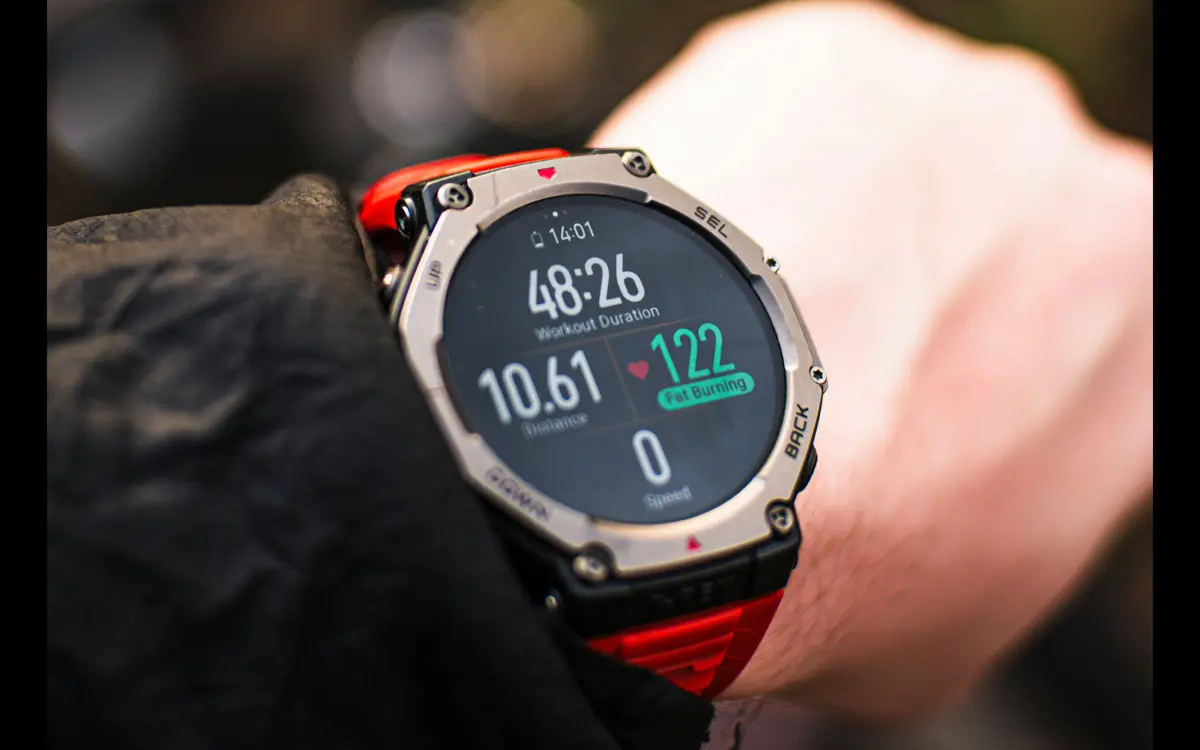
Your watch can do this for you. Apple Watch keeps measuring your heart rate for three minutes after a workout ends and logs the result in the Health app as Cardio Recovery. Garmin reports recovery heart rate as the drop two minutes after you stop, and asks you to stay still while it measures. The two numbers are not comparable with each other, only with themselves.
How to Improve Your Heart Rate Recovery
Aerobic training is the reliable lever. A systematic review of training studies found that in most of them recovery sped up as training status and power output improved (Daanen et al., 2012). A review of controlled trials found aerobic training improves recovery even in patients with established heart disease (Snoek et al., 2013).
What works in practice:
- Build an aerobic base. Most of your training at an easy, conversational effort in zone 2.
- Add one or two interval sessions a week. Hard intervals raise your VO2 max and train the switch between effort and recovery every few minutes.
- Protect recovery. Sleep, hydration and easy days. A recovery that suddenly slows during heavy training, together with a higher resting heart rate, is one of the early signs of overtraining.
Expect changes over weeks to months. Measure the same way every time and the trend will show you when it starts working.
Train the recovery you can measure
PEAKVO2 runs the interval sessions that raise VO2 max and speed up heart rate recovery, guided on iPhone and Apple Watch, with heart rate zones and automatic phases.
Get PEAKVO2 freeWhen to See a Doctor
Talk to a doctor if:
- Your one-minute recovery is 12 bpm or less on repeated, consistent measurements
- Your recovery slows sharply without an obvious reason such as illness, heat or heavy training
- A slow recovery comes with chest pain, dizziness, fainting, unusual breathlessness or an irregular heartbeat
Medication matters too. Beta blockers and some other drugs change how your heart rate rises and falls, so your numbers may not match the research cutoffs.
If your heart rate simply stays a little high for a while after hard intervals, that is usually normal; see why your heart rate stays elevated after exercise.
Frequently Asked Questions
What is heart rate recovery?
How many beats per minute your heart rate falls after you stop exercising, usually measured at one or two minutes. Finish at 170, read 140 a minute later, and your one-minute recovery is 30. The early drop reflects your vagus nerve switching back on.
What is a good heart rate recovery?
Anything above 12 bpm at one minute is outside the abnormal range, and more is better. There is no validated target above that line, so the best benchmark is your own number, measured the same way, over months.
What is an abnormal heart rate recovery?
A drop of 12 bpm or less one minute after a hard effort with a walking cool-down. In the Cleveland Clinic study that set this cutoff, it meant about twice the risk of death after adjustment for other factors. At two minutes after a submaximal test, the cutoff was 42 bpm or less.
How do I measure heart rate recovery?
Note your heart rate the moment you stop a hard effort, read it again one minute later, and subtract. Keep the effort, the cool-down and the device the same each time. Apple Watch and Garmin calculate it automatically if you keep the watch on and stay still.
Can you improve heart rate recovery?
Yes. Aerobic training speeds it up, in athletes, in less trained people and even in patients with heart disease. Easy base training plus one or two interval sessions a week is the practical recipe.
Does heart rate recovery get worse with age?
On average, but fitness explains much of it. When men were matched for fitness, age made no difference to recovery, while trained men recovered faster than untrained men in both age groups.
What is Cardio Recovery on Apple Watch?
Apple's name for heart rate recovery. The watch measures your heart rate for three minutes after a workout and logs the drop in the Health app under Heart.
References
- Cole CR, Blackstone EH, Pashkow FJ, Snader CE, Lauer MS. Heart-rate recovery immediately after exercise as a predictor of mortality. N Engl J Med. 1999;341(18):1351-1357. PubMed
- Cole CR, Foody JM, Blackstone EH, Lauer MS. Heart rate recovery after submaximal exercise testing as a predictor of mortality in a cardiovascularly healthy cohort. Ann Intern Med. 2000;132(7):552-555. PubMed
- Shetler K, Marcus R, Froelicher VF, et al. Heart rate recovery: validation and methodologic issues. J Am Coll Cardiol. 2001;38(7):1980-1987. PubMed
- Qiu S, Cai X, Sun Z, et al. Heart rate recovery and risk of cardiovascular events and all-cause mortality: a meta-analysis of prospective cohort studies. J Am Heart Assoc. 2017;6(5):e005505. PubMed
- Dhoble A, Lahr BD, Allison TG, Kopecky SL. Cardiopulmonary fitness and heart rate recovery as predictors of mortality in a referral population. J Am Heart Assoc. 2014;3(2):e000559. PubMed
- Imai K, Sato H, Hori M, et al. Vagally mediated heart rate recovery after exercise is accelerated in athletes but blunted in patients with chronic heart failure. J Am Coll Cardiol. 1994;24(6):1529-1535. PubMed
- Darr KC, Bassett DR, Morgan BJ, Thomas DP. Effects of age and training status on heart rate recovery after peak exercise. Am J Physiol. 1988;254(2 Pt 2):H340-H343. PubMed
- Trevizani GA, Benchimol-Barbosa PR, Nadal J. Effects of age and aerobic fitness on heart rate recovery in adult men. Arq Bras Cardiol. 2012;99(3):802-810. PubMed
- Fecchio RY, Brito L, Leicht AS, Forjaz CLM, Peçanha T. Reproducibility of post-exercise heart rate recovery indices: a systematic review. Auton Neurosci. 2019;221:102582. PubMed
- Daanen HA, Lamberts RP, Kallen VL, Jin A, Van Meeteren NL. A systematic review on heart-rate recovery to monitor changes in training status in athletes. Int J Sports Physiol Perform. 2012;7(3):251-260. PubMed
- Snoek JA, van Berkel S, van Meeteren N, Backx FJ, Daanen HA. Effect of aerobic training on heart rate recovery in patients with established heart disease; a systematic review. PLoS One. 2013;8(12):e83907. PubMed